
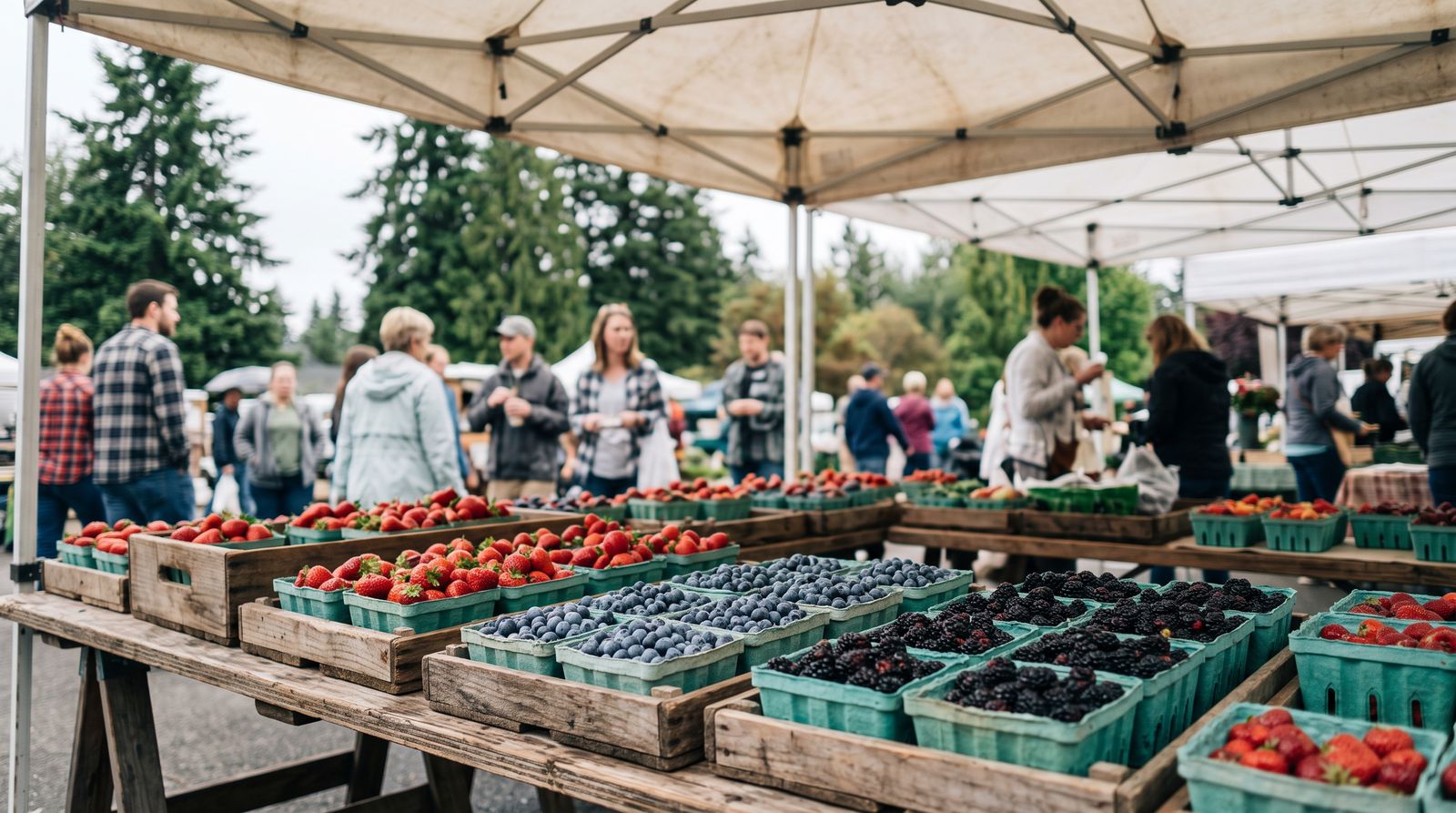
Grown and made in the 97 zip codes
Eat what Oregon is picking this week
97 Market is an Oregon market project for the people who grow food, the people who make things from it, and everyone who shops their tables. Start with the harvest calendar, then learn to shop, store and put up the season properly.
Five things worth knowing before market day
Each guide is written for a real decision: what to buy, how to keep it, and what to do with the surplus.
-
01
What's in season
Month-by-month harvest windows for Oregon fruit, vegetables and nuts.
-
02
Shopping a farmers market
Timing, payment, questions to ask growers and how to judge ripeness.
-
03
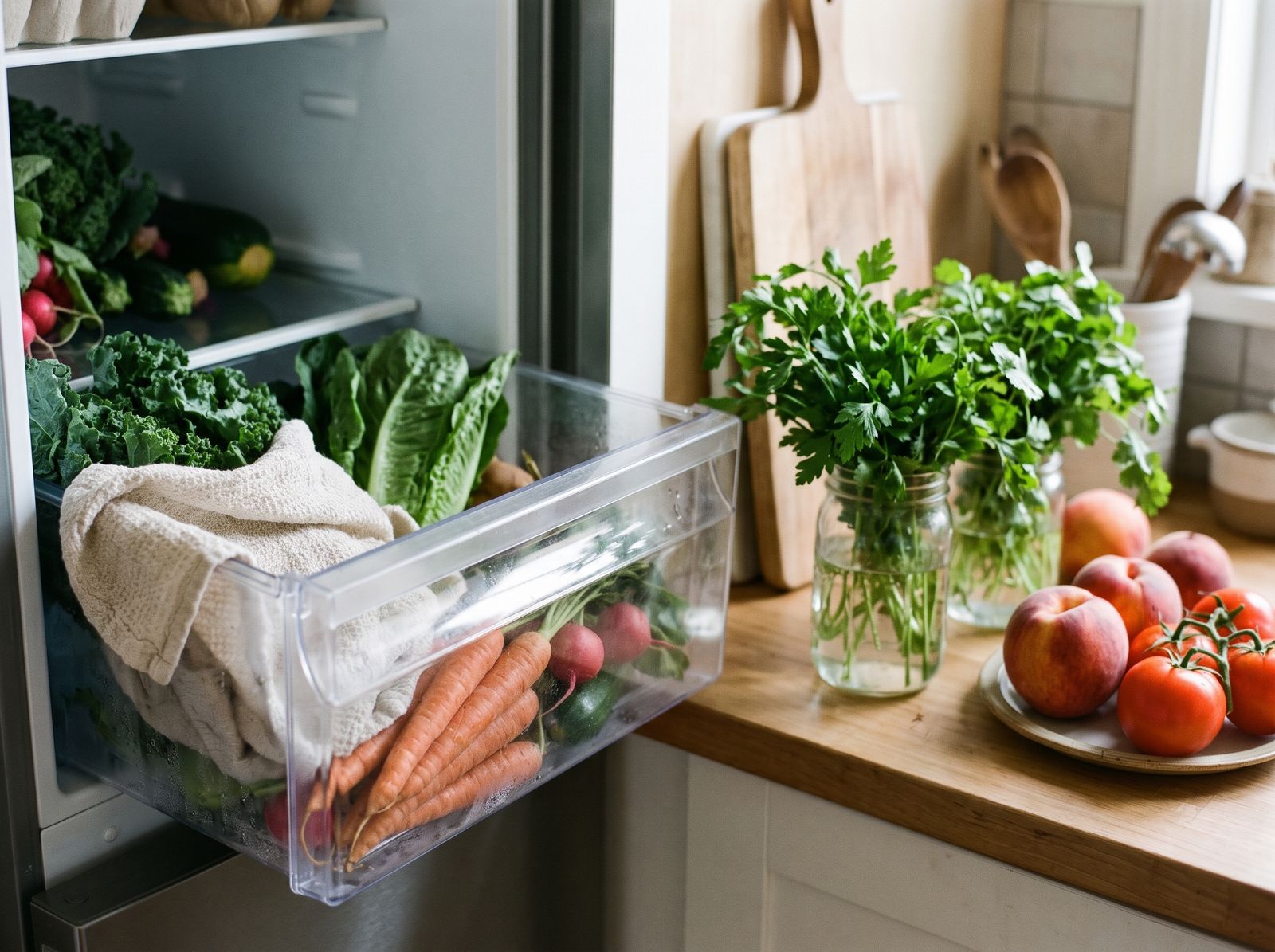
Storing fresh produce
Counter, crisper or cellar: keep market produce at its best for longer.
-
04
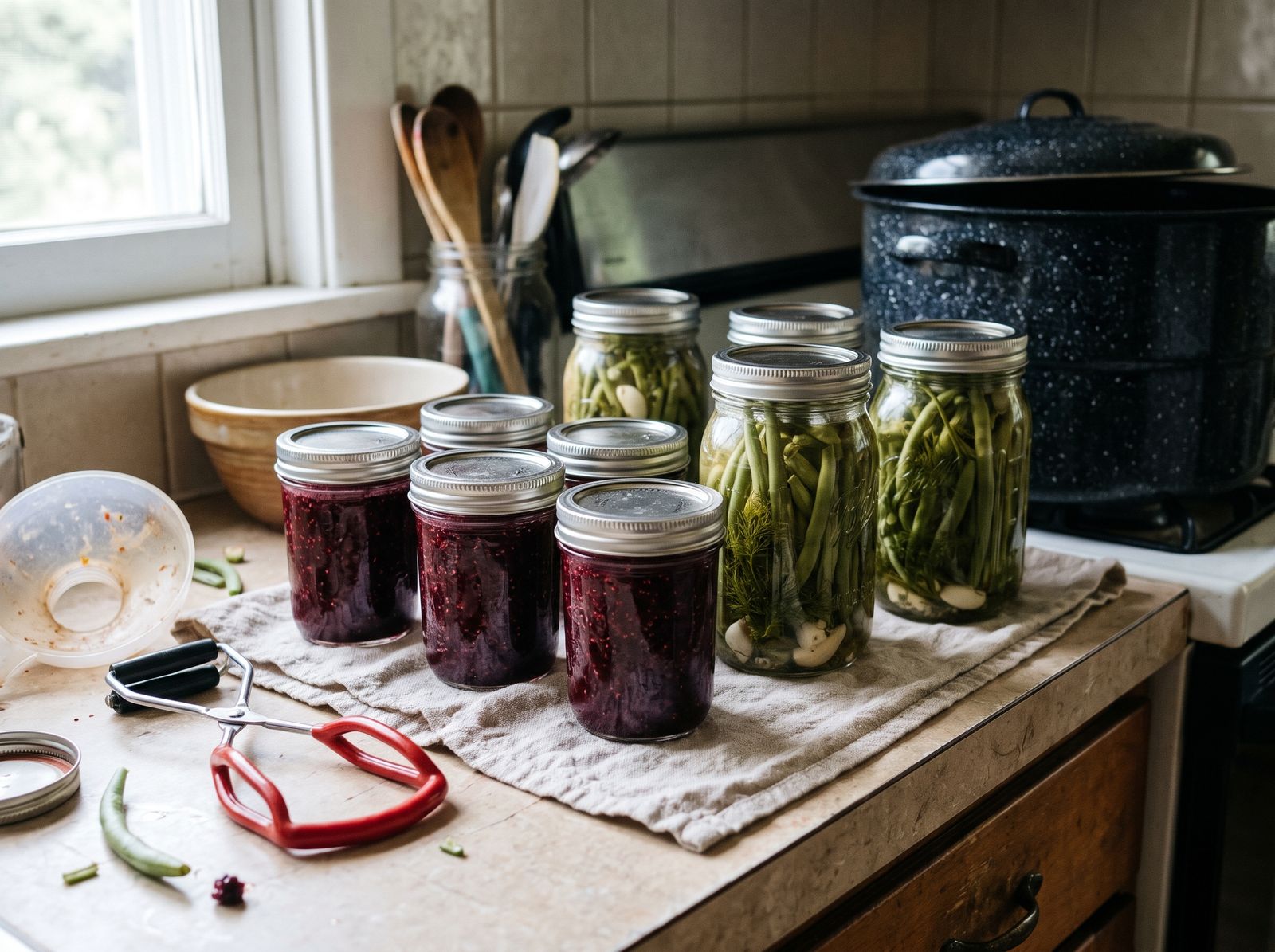
Preserving the harvest
Canning, freezing and drying, with the altitude rules Oregon cooks miss.
-
05
Becoming a market vendor
Licensing questions, booth setup and the first-season mistakes to avoid.
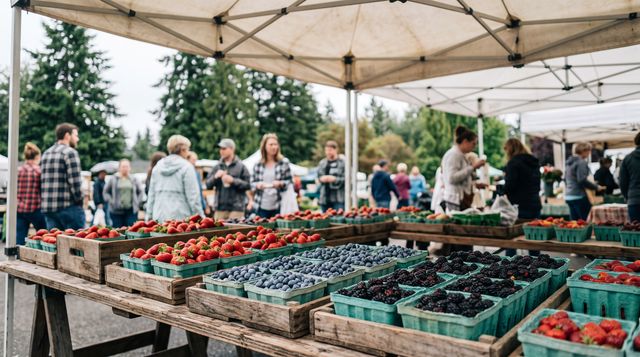
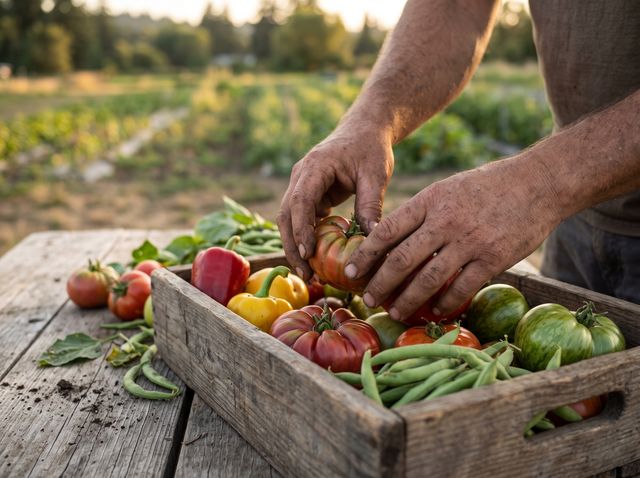
Buying from the person who grew it changes what you can get
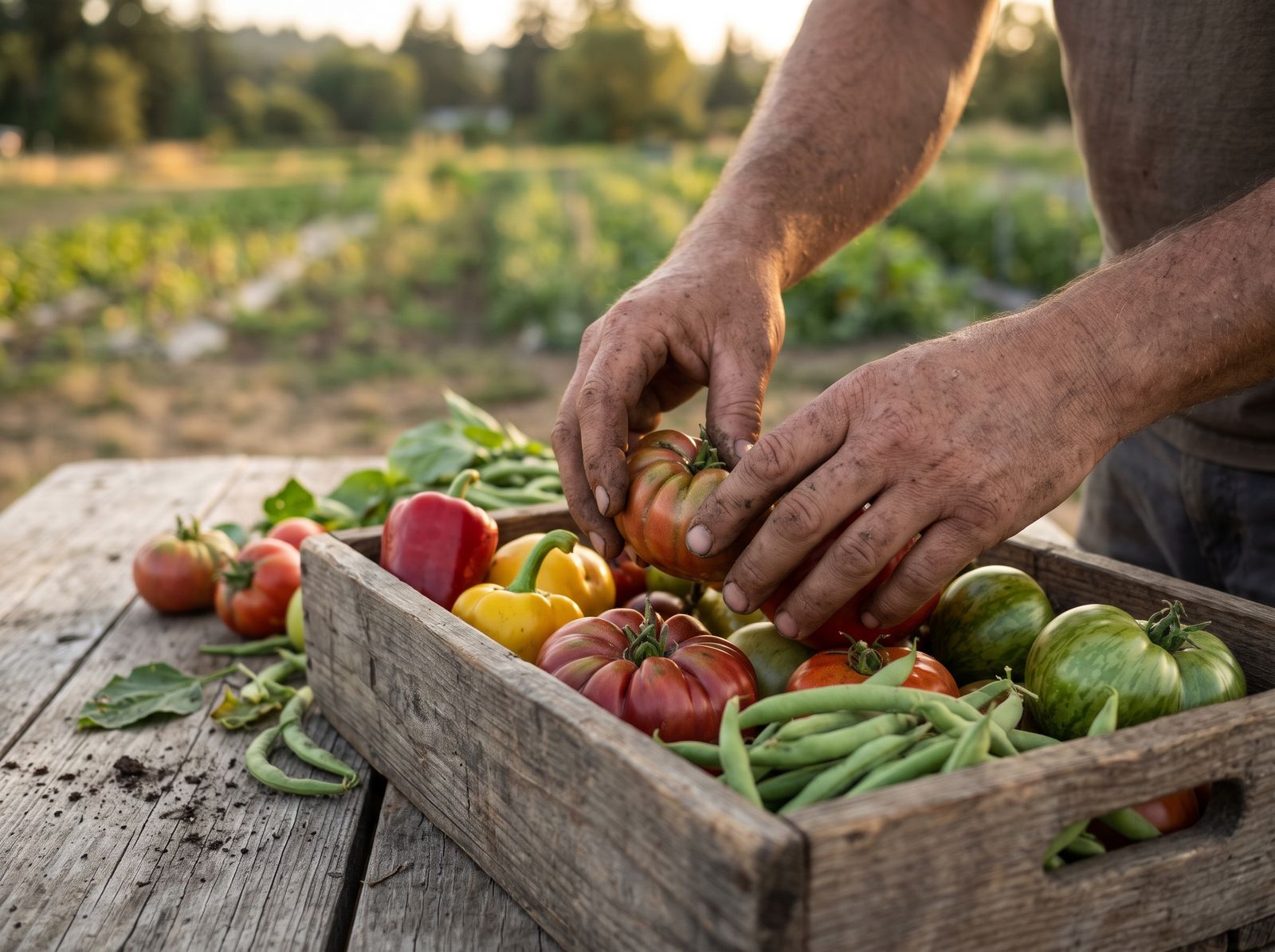
Supermarket produce is bred and picked to survive trucks and cold storage. A grower selling ten miles from the field can pick for flavor instead. That shows up in a few practical ways.
- Riper fruit. Berries and stone fruit can stay on the plant until they are actually ready, because they only need to last until Sunday dinner.
- Varieties that do not ship. Marionberries, soft heirloom tomatoes and fragile lettuces rarely survive long-haul distribution. Markets are where you find them.
- Answers. Ask how something was grown, when it was picked and how to cook it. The person behind the table usually knows. Our shopping guide lists the questions that get useful replies.
- Money that stays put. What you spend at a farm stand goes to a household business, not a distribution chain.
Ten Oregon crops and when they come in
Pale bands show the usual harvest window in the Willamette Valley; solid bands mark the peak. The outlined column is this month.
Selling at market is a small business with a canopy
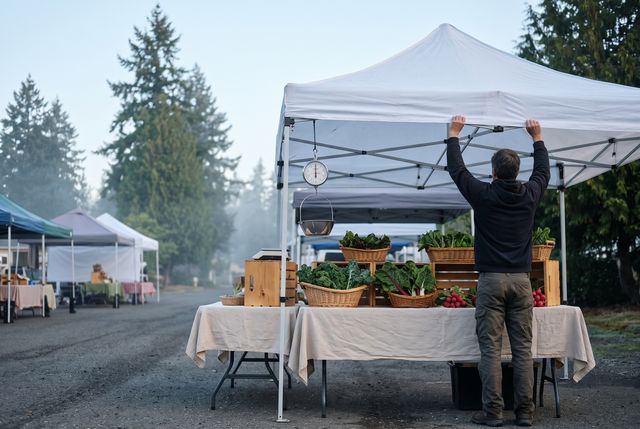
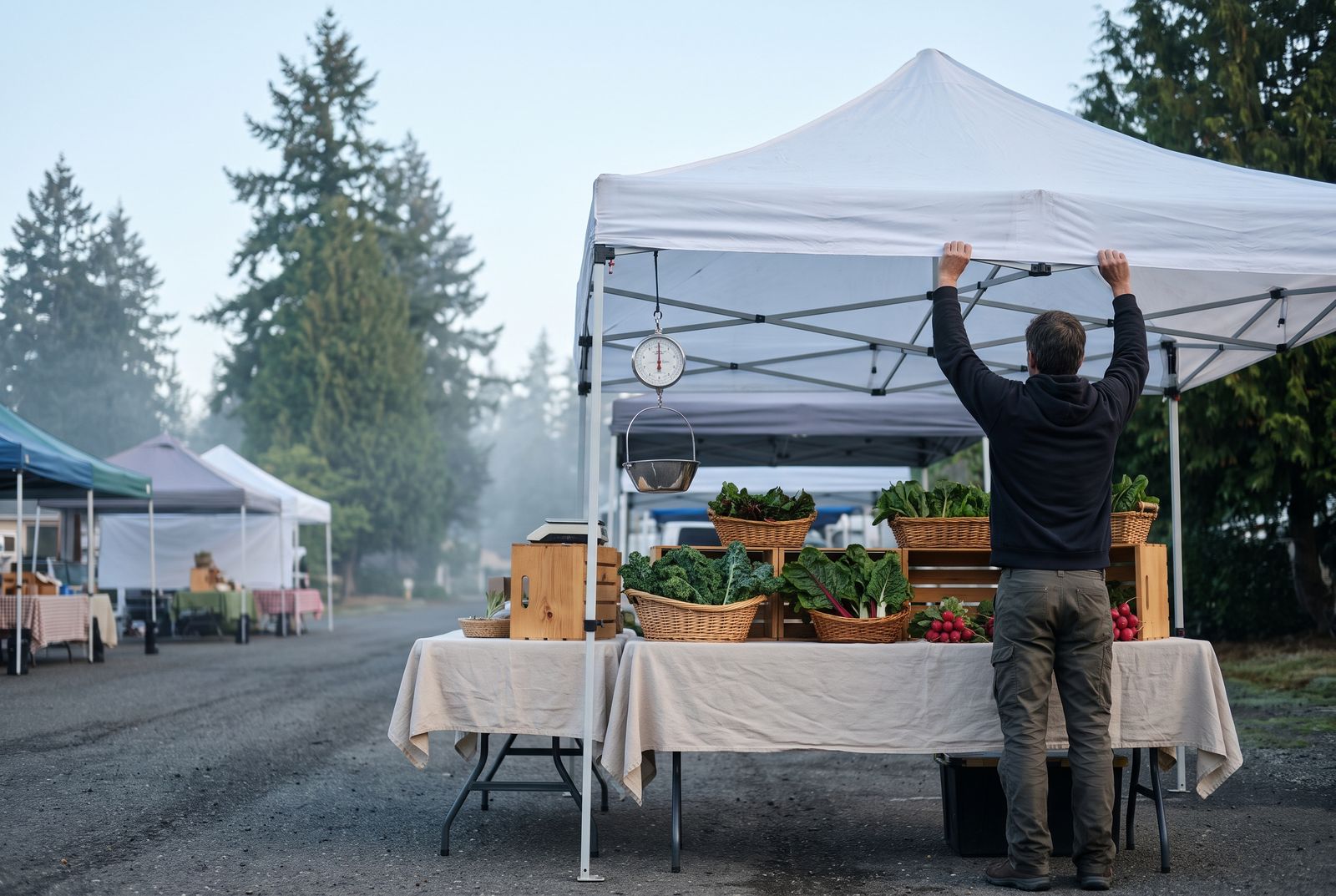
Most first-season vendors underestimate the paperwork and overestimate how much a tidy table sells on its own. Our vendor guide walks through the order to do things in, from the license questions to the weight of your canopy legs.
- Find out what you needRaw produce, processed foods and crafts follow different rules.
- Price before you packCount booth fees, mileage and the hours behind the table.
- Build a booth that readsHeight, abundance and clear signs move more than a flat table.
- Keep records from day oneSales by item tell you what to grow or make next year.
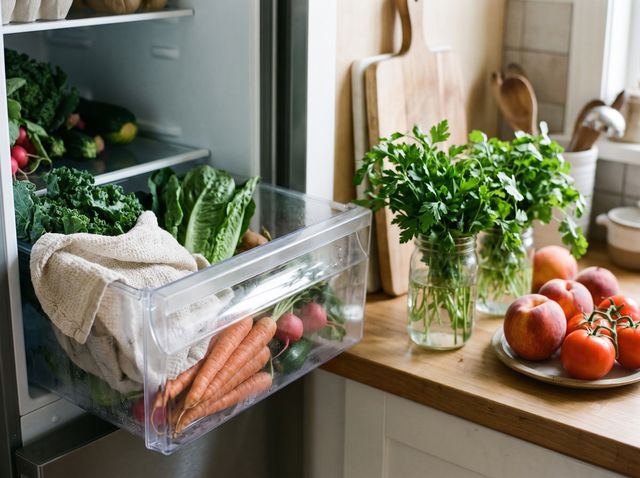
Bring it home and make it last
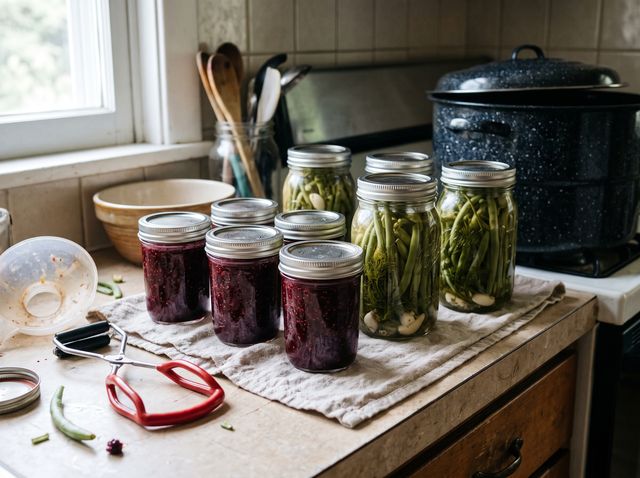
The best tomato of August is wasted if it sits in the fridge for a week. Two guides cover what happens after the tote bag hits the counter.
Grow it, make it, or want to help build it?
97 Market is talking with Oregon growers, food makers and community groups. If you would like to sell, partner, or simply ask a question, send a note and a person will reply.