
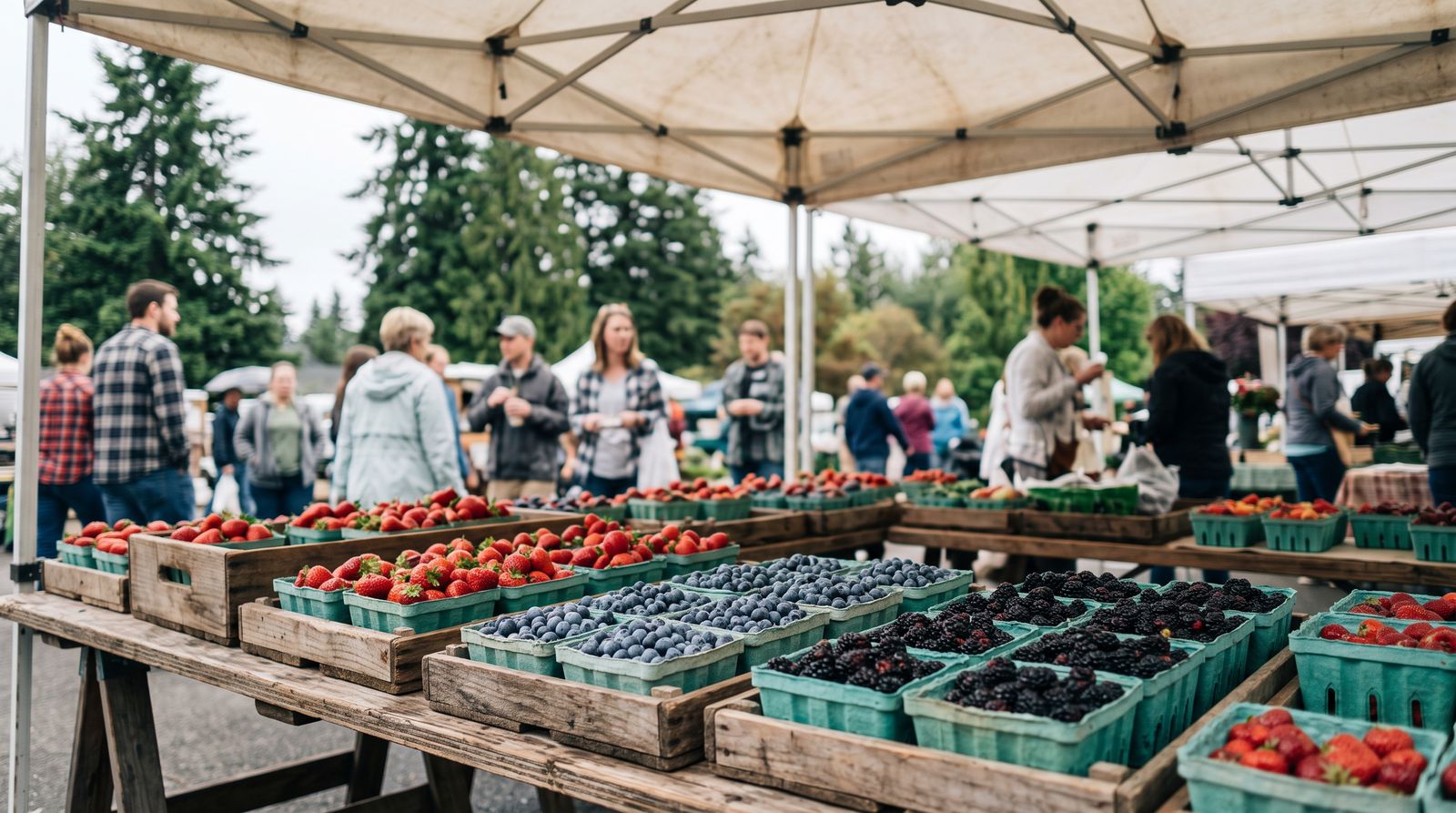
Pick a month and see what is coming in
The tool below draws on typical harvest windows for the Willamette Valley floor, where most of the state's market farms sit. Treat it as a planning guide. Weather moves every date, and individual growers stretch seasons with hoop houses, early varieties and storage.
Harvest explorer
Choose a month, then narrow it to fruit, vegetables or nuts. Crops at their peak are listed first.
- PearsPears ripen off the tree. Check the neck near the stem for a slight give.
- ApplesLate varieties store for months in a cold garage or fridge drawer.
- HazelnutsOregon grows nearly all of the commercial U.S. crop. Store shelled nuts cold.
- Winter squashCured squash keeps for weeks at cool room temperature.
- PotatoesNew potatoes have thin skins and do not keep. Cured ones last for months.
- Carrots and beetsTwist the greens off at home. They pull moisture from the roots.
- Brussels sproutsA frost or two makes them sweeter.
- Kale and chardCold-weather kale tastes noticeably sweeter than midsummer leaves.
- LeeksGrit hides between the layers. Split and rinse before cooking.
Oregon runs on at least three harvest clocks
Every Oregon zip code starts with 97, but the growing conditions behind them are wildly different. A single statewide calendar hides that, so it helps to know which clock your market follows.
The Willamette Valley
Mild, wet winters and dry summers give the valley a long season. This is berry country, and it is where most of the dates in the explorer come from. Hazelnut orchards are a common sight across the valley, and Oregon grows nearly all of the commercial hazelnuts in the United States.
East of the Cascades
Central Oregon markets sit at high elevation with cold nights well into June. Tomatoes, peppers and melons arrive late and leave early, often cut short by an early frost. In the Columbia Basin to the north and east, hot summers and irrigation produce the opposite story: big melon and sweet corn crops, with Hermiston watermelons as the famous example.
The coast and the Gorge
Coastal growers deal with fog and cool summers that suit lettuce, brassicas and berries more than heat lovers. The Hood River Valley, in the Columbia Gorge, is orchard land, and its pears and apples dominate fall tables across the north of the state.
For warm-season crops, add one to three weeks to valley dates for higher-elevation markets, and subtract a week or two for hot, irrigated areas east of the mountains. Cool-season greens often flip the pattern, doing best where summer stays mild.
Spring: green things first, then the first berries
March and April markets are thin on fruit. What they do have is the sweetest overwintered kale, leeks and the first salad mixes from covered beds. Asparagus and rhubarb usually arrive in April, and by May you will see peas, radishes, spring onions and pea shoots.
Late May brings the moment many shoppers wait for: the first local strawberries. Oregon-grown June-bearers are softer and redder all the way through than shipping varieties, which also means they bruise easily and should be eaten within a day or two.
Summer: berries, stone fruit, then the tomato flood
June and July belong to berries. Strawberries peak in June, followed by cherries, raspberries, marionberries and other blackberry types, then blueberries running through August. Garlic is harvested and cured in early summer, and summer squash shows up in quantities that surprise first-time gardeners.
August is the heaviest month for many stalls. Peaches, sweet corn, tomatoes, peppers, cucumbers, green beans and melons all overlap. If you plan to can tomatoes or freeze corn, late August into September is the cheapest and most flavorful time to buy in bulk.
Marionberries, the Oregon-bred blackberry named for Marion County, have one of the shortest runs on the calendar. If they matter to you, ask a grower in late June when they expect to start picking and whether they take orders for flats. Waiting for a convenient weekend is the most common way to miss them entirely.
Fall: orchard fruit, nuts and the storage crops
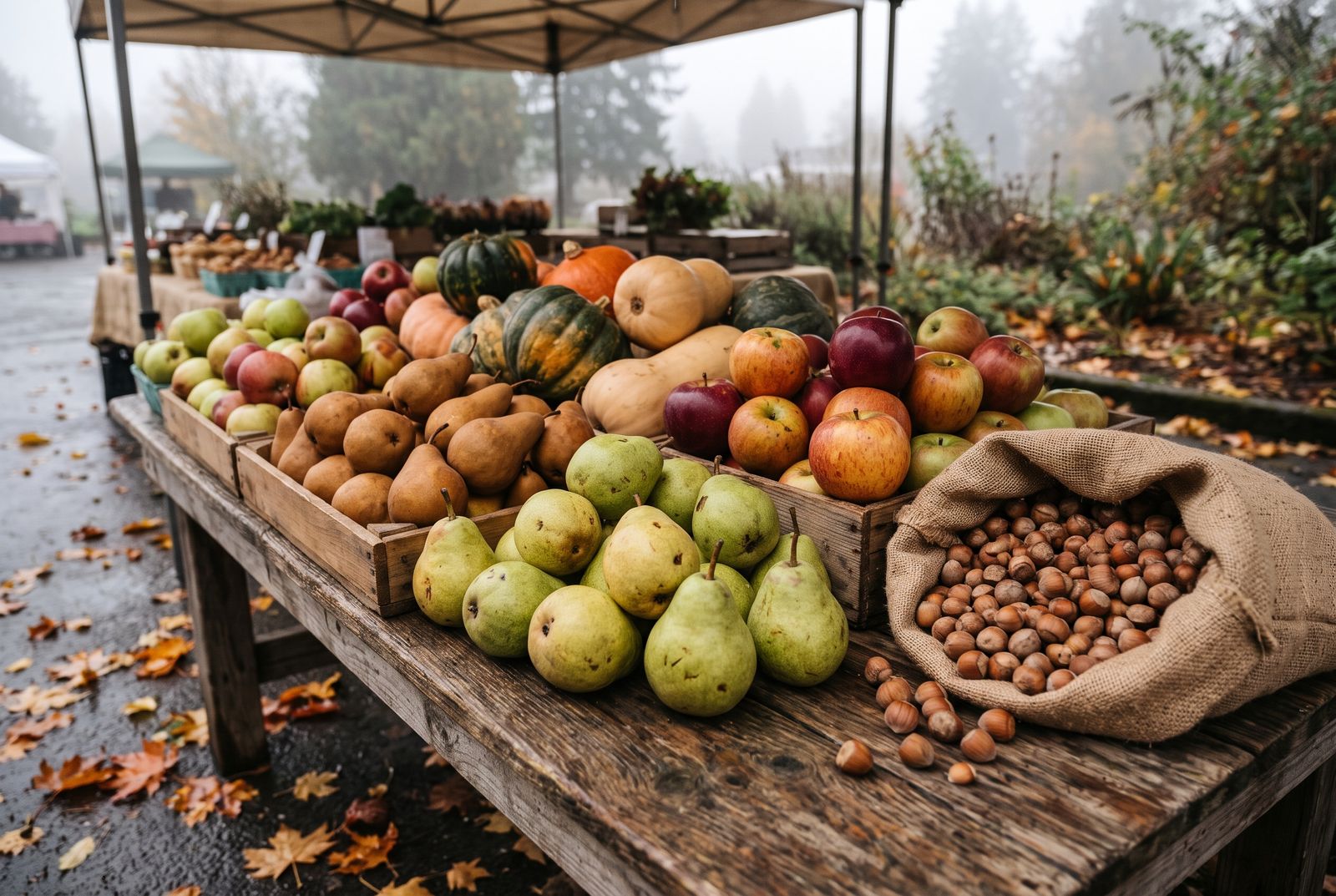
September keeps summer's tomatoes and peppers going while pears and early apples pile up. October is harvest month for hazelnuts and winter squash, and potatoes, carrots, beets and onions come out of the ground in quantity. Cooler nights sweeten brassicas, so kale and cabbage taste better now than they did in July.
Fall is also when buying for storage makes sense. Cured winter squash, late apples, potatoes and onions bought in October can last into the new year if they are kept at the right temperature. Our produce storage guide covers where each one should live.
Winter: fewer stalls, better keepers
Many outdoor markets close or shrink between November and March. The produce that remains is mostly storage crops and frost-hardy greens: leeks, kale, Brussels sprouts, cabbage, stored apples and pears, winter squash and nuts. It is a good season to talk with growers, who have more time at the table than in August.
Early, peak or late: when to buy for what
Not every point in a season is equal. The same crop behaves differently at the start, middle and end of its run.
| Stage | What you see | Best use |
|---|---|---|
| Early | Small quantities, higher asking prices, flavor still building in some crops | Eating fresh, a first taste of the year |
| Peak | Most stalls stocked, best flavor, bulk flats and seconds often available | Canning, freezing, jam, sauce |
| Late | Uneven sizes, some weather damage, growers clearing fields | Cooking, sauces, dried fruit, deals on seconds |
When you have more than you can eat, the preserving guide explains which method fits which crop, and the shopping guide covers how to ask for bulk or seconds without awkwardness.
Questions about Oregon's growing seasons
When does Oregon strawberry season start?
In the Willamette Valley the first June-bearing strawberries usually show up in late May, and the main run is concentrated in June. Day-neutral varieties keep producing smaller flushes into September. A cold, wet spring can push the start back by a week or two.
When are marionberries in season?
Marionberries are a July fruit in western Oregon, and the window is short, often only a few weeks. If you want them for jam or pie, plan around the first half of July and ask growers when they expect to start picking.
Is anything in season at Oregon markets in winter?
Yes, though the list is shorter. Storage crops such as apples, pears, winter squash, potatoes, onions and hazelnuts carry through the cold months, and hardy greens like kale, leeks and Brussels sprouts often keep producing after frost. Some markets run a reduced winter schedule; check each market directly.
Why do the same crops arrive later in Bend than in Salem?
Elevation and frost. Central Oregon sits much higher than the Willamette Valley and has colder nights and a shorter frost-free season, so warm-season crops are planted later and finish earlier. Coastal gardens fight cool summer fog instead, which favors greens and slows tomatoes.
Does "in season" mean the produce is local?
Not automatically. A crop can be in season in Oregon while a stall also sells something trucked in. Most farmers markets set rules about what vendors may resell, and the simplest check is to ask the person at the table where it was grown.
No question matches that word. Try a shorter search.