
Most produce waste at home is not about buying too much. It is about putting things in the wrong place. A tomato in the fridge, carrots with their greens attached, berries washed on Saturday and sealed in a bag: each one shortens the life of food that was picked within the last day or two.
Look up where it goes
Storage lookup
Type a fruit, vegetable or herb, or filter by where it belongs.
- ApplesFridgeCold keeps them crisp for weeks. A bowl on the counter softens them within days.
- AsparagusFridgeTrim the ends and stand the bunch upright in an inch of water, loosely covered.
- BasilCounterStems in a glass of water at room temperature. The fridge turns the leaves black.
- BeetsFridgeCut greens off, leaving an inch of stem. Store roots and greens separately.
- BlueberriesFridgeUnwashed, in a shallow container. Wash just before eating.
- Broccoli and cauliflowerFridgeLoosely wrapped in the high-humidity drawer. Use within a few days.
- CabbageFridgeWhole heads keep for weeks. Peel off outer leaves as they wilt.
- CarrotsFridgeTwist off the tops, then bag the roots. Ethylene can make them bitter.
- CherriesFridgeUnwashed, stems on, in a shallow container. Eat within a few days.
- CucumbersFridgeWrap and use within a week. They dislike the coldest part of the fridge, so keep them near the front.
- Garlic (cured)Cool & darkDry, dark and ventilated. Not in a sealed bag and not in the fridge.
- Green beansFridgeUnwashed in a bag in the crisper. Best within three to five days.
- HazelnutsFridgeShelled nuts go rancid at room temperature. Refrigerate, or freeze for longer storage.
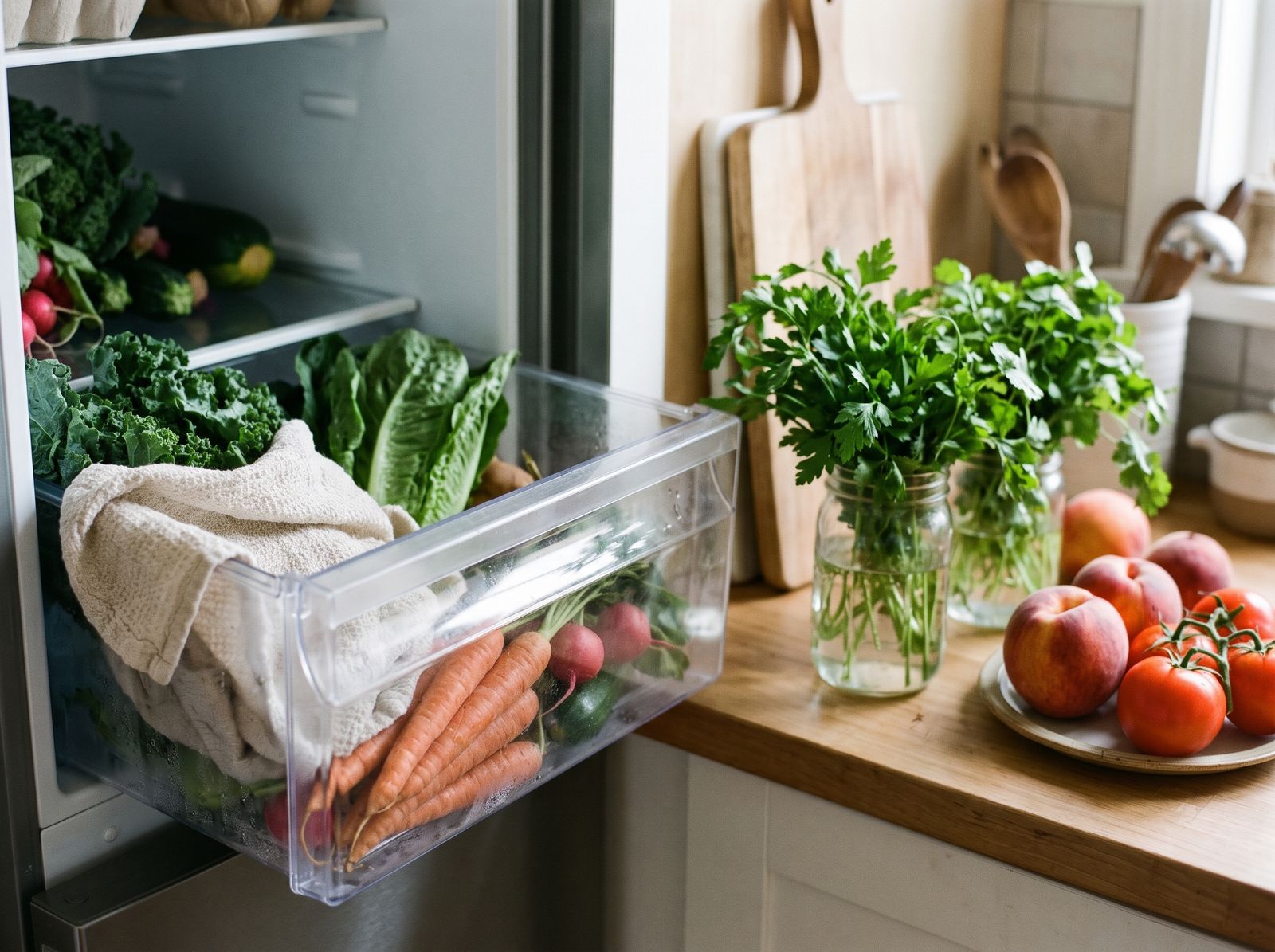
- Herbs, tender (parsley, cilantro)FridgeStems in a jar of water with a loose bag over the top, like cut flowers.
- Kale and chardFridgeWrap in a barely damp towel inside a bag. Revive limp leaves in cold water.
- LeeksFridgeUnwashed and loosely wrapped. Clean them only right before cooking.
- Lettuce and salad mixFridgeDry leaves in a container lined with a towel. Keep far from apples and pears.
- Melons (whole)CounterWhole on the counter until ripe, then the fridge. Cut melon always goes in the fridge.
- Onions (cured)Cool & darkDry and ventilated, away from potatoes, which make each other spoil faster.
- Peaches and plumsCounterShoulder side down on the counter until fragrant and slightly soft, then the fridge.
- PearsCounterRipen on the counter until the neck gives slightly, then refrigerate to hold.
- PeasFridgeKeep in the pod and cook within a day or two. Sugar turns to starch quickly.
- PeppersFridgeUnwashed in the crisper. Use within a week to ten days.
- PotatoesCool & darkDark, cool and ventilated. Light turns them green, and fridge cold makes them sweet and grainy.
- RadishesFridgeRemove the greens, then store roots in a bag. Greens can be cooked like spinach.
- Raspberries and blackberriesFridgeSingle layer on a towel-lined tray. Eat within a day or two, or freeze.
- RhubarbFridgeLeaves off, stalks wrapped. Keeps a week or more.
- StrawberriesFridgeUnwashed, caps on. Take out an hour before eating for better flavor.
- Summer squash and zucchiniFridgeUnwashed in the crisper. Use within about a week.
- Sweet cornFridgeHusks on, cooked as soon as possible. Every day costs sweetness.
- TomatoesCounterStem side down, out of the sun. Refrigerate only fully ripe ones you cannot use in time.
- Winter squashCool & darkCool room temperature, not cold. Cured squash keeps for weeks to months.
There are only three places, and each has a job
The refrigerator
Cold slows respiration, the process that makes produce soften, lose sugar and eventually rot. Anything leafy, cut, or already ripe usually belongs here. Most home fridges run around 37 to 40 degrees Fahrenheit, which is right for greens, berries and roots. The back of the top shelf in some fridges runs colder and can freeze delicate leaves.
The counter
Room temperature is for produce that is still ripening or that cold damages. Tomatoes, unripe peaches, plums, pears and whole melons all belong on the counter until they are ready. Keep them out of direct sun, and spread them out instead of piling them.
Somewhere cool and dark
Potatoes, cured onions, garlic and winter squash want something in between: roughly 45 to 60 degrees, dark, dry and ventilated. A basement, an unheated pantry, or a cupboard on an outside wall works. A garage works too in western Oregon, as long as it does not freeze. Store potatoes and onions apart; each speeds the other's spoilage.
The ethylene rule explains half the advice you have heard
Some fruits release ethylene, a gas that triggers ripening. Others are sensitive to it. Store them together and the sensitive ones yellow, wilt or turn bitter early.
| Gives off ethylene | Sensitive to ethylene | What happens |
|---|---|---|
| Apples, pears | Lettuce, kale, broccoli | Yellowing, faster wilting |
| Peaches, plums, apricots | Cucumbers, summer squash | Soft spots and quicker decay |
| Ripe tomatoes, melons | Carrots | Bitter flavor |
You can also use ethylene on purpose. A firm pear or peach in a paper bag with a ripe apple will ripen faster. Paper lets moisture escape; plastic traps it and invites mold.
What the crisper drawer slider actually does
Many fridges have two drawers with a slider marked high and low, or a picture of leaves and fruit. The slider opens or closes a small vent.
Washing, trimming and the towel trick
Water left on produce is the fastest route to mold. As a default, store everything unwashed and wash right before use. For berries in particular, washing on the day you buy them can cost you two days of life.
Trim leafy tops from root vegetables as soon as you get home. Carrot, beet and radish greens keep pulling moisture out of the roots, which go limp quickly. Beet greens and radish tops are edible; cook them within a day or two.
For lettuce, kale, chard and salad mix, line a container or bag with a clean, barely damp kitchen towel. It holds humidity around the leaves without letting water sit on them. Replace it if it gets soggy.
The mistakes that cost the most
- Refrigerating tomatoes you plan to eat raw. Cold dulls flavor and makes the texture mealy.
- Putting potatoes in the fridge. Cold converts starch to sugar, which changes taste and makes them brown faster when fried or roasted.
- Sealing berries in a closed container. Trapped moisture molds them. Leave the lid cracked or use the vented basket they came in.
- Leaving shelled hazelnuts in the pantry. Their oils go rancid. Refrigerate or freeze.
- Storing everything in one bowl. Apples and bananas in the same bowl as avocados or tomatoes ripen everything at once.
The rule behind all of it
Whole, uncut and still ripening goes on the counter. Ripe, cut or leafy goes in the fridge. Cured storage crops go somewhere cool, dark and dry. When you have more than you can use in time, move to the preserving guide before the fruit turns, not after.
Storage questions
Should I wash produce before putting it in the fridge?
Generally no. Moisture speeds up mold, especially on berries, greens and mushrooms. Wash right before you eat or cook. The exception is very dirty greens or leeks, which you can wash, dry thoroughly and store wrapped in a towel.
Why should tomatoes stay out of the fridge?
Cold below about 50 degrees Fahrenheit damages the compounds that give tomatoes their flavor and makes the texture mealy. Keep them on the counter. If a fully ripe tomato will not be used in time, refrigerating it is better than losing it; let it warm up before eating.
Which fruits should be kept away from leafy greens?
Apples, pears, peaches, plums, ripe melons and tomatoes give off ethylene gas, which speeds ripening. Lettuce, kale, broccoli, cucumbers and carrots are sensitive to it and yellow, wilt or turn bitter faster when stored nearby.
What do the crisper drawer settings do?
The slider opens or closes a vent. Closed means high humidity, which suits things that wilt: greens, herbs, carrots, broccoli. Open means low humidity, which suits fruit that rots more easily, like apples and pears, and lets ethylene escape.
Can I bring limp greens back?
Usually yes. Trim the stem ends and soak kale, chard, lettuce or herbs in a bowl of very cold water for 15 to 30 minutes, then dry them well. They take up water and firm up again. It does not work on leaves that have turned slimy.
No question matches that word. Try a shorter search.